Kitchen Chimney vs Range Hood: What’s the Difference and Which Is Better in Nepal?
September 07, 2026Kitchen chimney vs range hood in Nepal: learn the real difference and what to compare for suction, pressure, motor, grease control, cleaning, and installation.
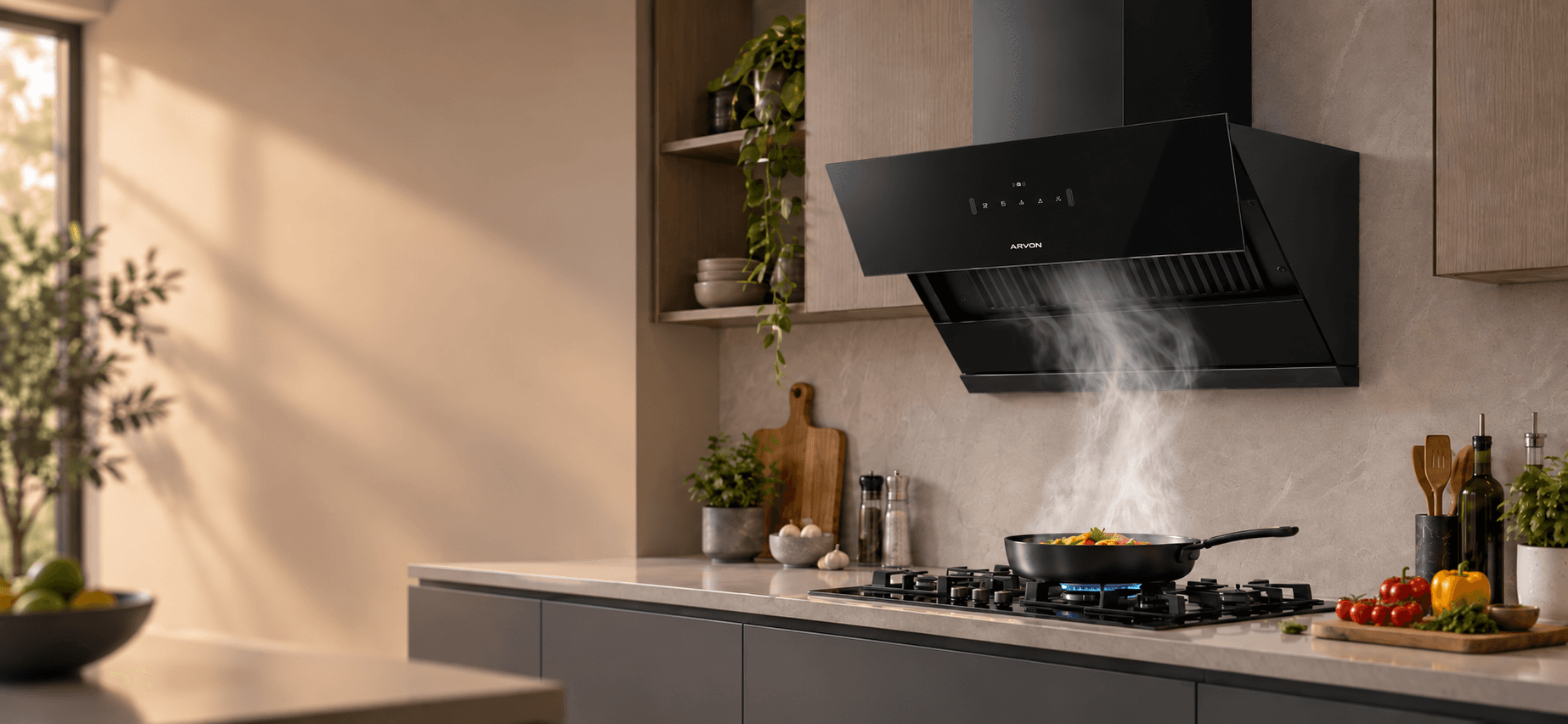
If you are shopping for a kitchen chimney in Nepal, you may also see the same type of appliance advertised as a range hood, kitchen hood, or simply hood.
This creates one of the most common questions for buyers:
What is the difference between a kitchen chimney and a range hood?
The simple answer is that, in the Nepal kitchen-appliance market, “kitchen chimney” and “range hood” usually refer to the same basic category of appliance—a ventilation system installed above your gas hob or cooktop to remove smoke, steam, grease, oil particles, and cooking odors.
The biggest difference is usually the name, not the fundamental purpose of the appliance.
Why Is It Called a Kitchen Chimney in Nepal?
The term kitchen chimney is widely understood across Nepal and other South Asian markets.
Many traditional wall-mounted models have a decorative vertical cover over the exhaust duct. Because this structure resembles a chimney, the complete appliance became commonly known as a kitchen chimney.
Range hood is the more internationally common appliance term.
So when you see:
Kitchen Chimney
Range Hood
Kitchen Hood
Cooker Hood
they may all be referring to the same general ventilation appliance.
This is why someone searching for the best kitchen chimney in Nepal and someone searching for the best range hood in Nepal may actually be looking for the same product.
Chimney vs Range Hood: Is One Better?
Not simply because of the name.
A product advertised as a “kitchen chimney” is not automatically more powerful than something called a “range hood,” and a range hood is not automatically more advanced.
Instead of comparing the terminology, customers should compare the engineering and specifications behind the appliance.
Important factors include:
IEC airflow, maximum static pressure, motor technology, grease and oil separation, cleaning technology, duct installation, noise, controls, hood width, build quality, warranty, and after-sales service.
These characteristics tell you much more about the actual product than whether the box says chimney or range hood.
Why a Range Hood Is Important for Nepali Cooking
Nepali kitchens can place significant demands on ventilation.
Everyday cooking may include frying, tadka or tempering, curries, spices, pressure cooking, boiling, roasting, and high-temperature cooking.
These methods can create substantial smoke, steam, airborne grease, oil particles, heat, and strong aromas.
Without effective extraction, grease can gradually settle on kitchen cabinets, tiles, ceilings, walls, and nearby appliances.
Strong cooking smells can also spread into dining rooms, living rooms, bedrooms, and other parts of the home—especially in modern apartments and open-plan kitchens.
A properly installed range hood or kitchen chimney captures much of this contaminated air close to the cooking source before it has an opportunity to spread.
High Suction Is Important, but Check IEC Airflow
One of the most searched features when buying a kitchen chimney in Nepal is suction power.
That makes sense: the hood must move enough air to capture the smoke generated during cooking.
However, customers should look carefully at how the airflow number is measured.
There can be a difference between unrestricted or free-air airflow and airflow measured under standardized test conditions.
When available, Standard IEC Airflow can provide a more meaningful reference for comparing extraction performance between products.
A larger number printed on a box does not automatically mean a better-performing kitchen chimney if it represents a different test method.
Static Pressure Is Just as Important
This is one specification many customers overlook when comparing range hoods in Nepal.
After the hood captures smoke, it still needs to push that air through the duct and eventually outside the building.
Ducting creates resistance.
Every:
- Bend
- Long horizontal section
- Narrow duct
- Restriction
- Poorly designed outlet
can make it harder for the range hood to move air.
Static pressure represents the hood's ability to work against this resistance.
For this reason, a premium range hood should offer a good balance between strong airflow and sufficient static pressure.
This can be particularly important in apartments and modular kitchens in Kathmandu and other urban areas where the exhaust route may not always be short and straight.
Grease and Oil Are Major Concerns in Nepali Kitchens
A good chimney should not only remove visible smoke.
Frying, spices, oil, and high-temperature cooking release microscopic grease and oil particles into the airflow.
Over time, uncontrolled grease can accumulate around the blower, internal housing, and ventilation path.
Selected Arvon Range Hoods use a patented blower combined with Nano Technology to separate grease and oil from the airflow.
This technology is designed to reduce the amount of grease and oil reaching important internal areas, helping the range hood remain cleaner and supporting more consistent extraction.
For households that fry frequently or use oil and spices every day, effective grease management can be just as important as the headline suction figure.
Does Auto-Clean Mean You Never Have to Clean the Chimney?
No.
This is another area where customers should understand what the technology actually does.
Selected Arvon models use an automatic self-cleaning system that activates after accumulated operation to help reduce grease buildup inside the range hood.
This makes internal maintenance easier.
However, normal cleaning of the outside surfaces and accessible components should still be carried out as recommended.
A better way to think about self-cleaning is that it reduces the burden of internal grease management rather than making all cleaning unnecessary.
AC Motor vs BLDC Motor
Customers comparing premium kitchen chimneys may also come across AC and BLDC motors.
Both can be used effectively when the complete range hood system is properly engineered.
Selected Arvon models use fully sealed AC motors, while premium configurations are available with fully sealed BLDC motors.
BLDC technology allows precise electronic motor control and can provide powerful pressure performance in high-end extraction systems.
But customers should still evaluate the complete product rather than purchasing based on motor terminology alone.
A premium BLDC motor combined with poor ducting cannot compensate for a badly installed ventilation system.
Kitchen Chimney Size Matters
The width of your chimney or range hood should also match the cooking zone appropriately.
Modern hoods are commonly available in widths designed to cover standard hob sizes.
For a larger hob or wider cooking zone, a wider range hood provides more effective capture coverage.
Your final selection should consider:
- Hob width
- Kitchen size
- Cooking intensity
- Installation height
- Available duct route
- Range hood width
- Cabinet layout
Proper installation is just as important as choosing the appliance itself.
What About Noise?
Customers searching for the best kitchen chimney in Nepal should also consider noise.
A range hood contains a motor and blower moving large volumes of air, so some operating sound is normal.
Noise can depend on:
- Motor technology
- Blower design
- Fan speed
- Airflow
- Duct size
- Number of bends
- Installation quality
Using Turbo mode will generally produce more sound than operating at a lower fan speed because the system is moving more air.
The goal is therefore not simply to search for “zero noise,” but to find a good balance between extraction performance and everyday comfort.
Modern Controls Make Chimneys Easier to Use
Modern range hoods have moved far beyond traditional push buttons.
Selected Arvon Range Hoods include touch control and hand-gesture operation, allowing users to adjust the extraction level more conveniently while cooking.
Gesture control can be especially useful when your hands are wet, oily, or occupied with food preparation.
Multiple speeds and Turbo mode also allow the extraction level to match the cooking situation.
Light boiling may require less ventilation, while heavy frying or high-temperature cooking can benefit from stronger extraction.
Kitchen Chimney vs Range Hood Price in Nepal
If you are comparing kitchen chimney prices in Nepal or range hood prices in Nepal, avoid choosing based only on the lowest price or highest advertised suction number.
Instead, compare the complete package:
Airflow measurement
Static pressure
Motor technology
Grease and oil separation
Cleaning technology
Noise
Speed control
Duct requirements
Build quality
Glass and body construction
Warranty
Installation
After-sales service
Two products with similar-looking exteriors can have very different internal engineering.
Which Is Better for Nepal: Chimney or Range Hood?
The answer is simple:
Do not choose based on whether the product is called a chimney or range hood. Choose based on its performance and engineering.
In Nepal, the terms are often used for the same appliance category.
For modern Nepali cooking, what matters is choosing a ventilation system capable of handling smoke, grease, oil, steam, strong cooking odors, and demanding everyday use.
A well-designed range hood should combine strong airflow with good static pressure, effective grease management, reliable motor technology, convenient controls, easier maintenance, and proper installation.
For homeowners building or upgrading a modern kitchen in Nepal, understanding these factors is far more useful than worrying about whether the appliance is called a kitchen chimney or a range hood.
Ultimately, both names lead to the same goal:
a cleaner, fresher, more comfortable kitchen.